
If you work in the meat trade, premium food retail, or professional kitchens, you've almost certainly encountered the name Ibérico pork. But "Ibérico" is not just a marketing term—it is a legally protected designation governed by one of the strictest food classification systems in the world.
This guide explains what Ibérico pork actually is: the breed, the fat chemistry that makes it unique, the Spanish regulatory framework that guarantees its quality, the cuts that matter for professional buyers, and how it compares to conventional pork.
What Makes Ibérico Pork Different? The Biology
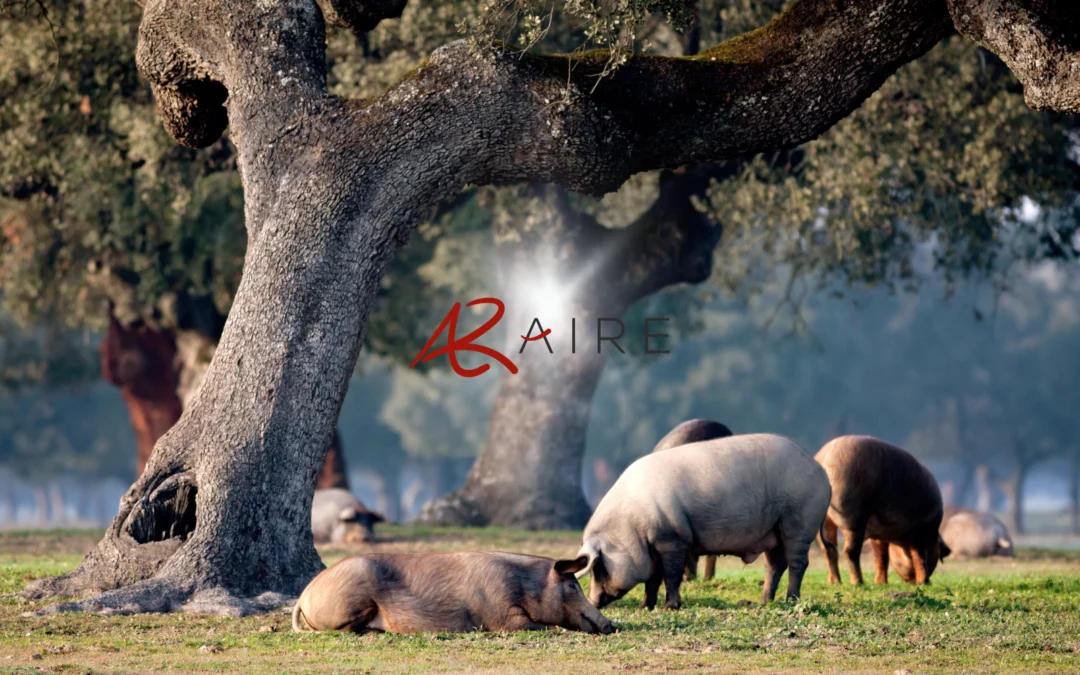
The Cerdo Ibérico is a breed native to the Iberian Peninsula, descended from the Mediterranean wild boar. It has been raised for centuries in the Dehesa—the vast oak woodland ecosystem of western Spain and Portugal.
What sets the Ibérico breed apart from conventional commercial breeds (Large White, Landrace, Pietrain) is a genetic predisposition to store fat within the muscle fibers, not just beneath the skin. This intramuscular fat infiltration is what produces the intense marbling that defines Ibérico pork and makes it fundamentally different from any other pork on the market.
The practical consequences of this biology matter in a commercial context:
- Texture and tenderness: The intramuscular fat melts during cooking, keeping the meat juicy and self-basting even at high temperatures.
- Fat quality: In acorn-fed (Bellota) grades, the fat is exceptionally rich in oleic acid—the same monounsaturated fatty acid found in olive oil. This gives it a lower melting point and a distinctive, clean mouthfeel.
- Premium positioning: Ibérico pork commands higher price points than any conventional pork product, making it a strategic category for distributors and restaurants focused on the premium segment.
The Dehesa: Where Ibérico Pork Comes From
The Dehesa is a unique agro-pastoral ecosystem covering millions of hectares across southwestern Spain, particularly in the regions of Extremadura, Salamanca, Huelva, and Córdoba. It is a landscape of open-canopy holm oak (encina) and cork oak (alcornoque) forests, where Ibérico pigs roam freely.
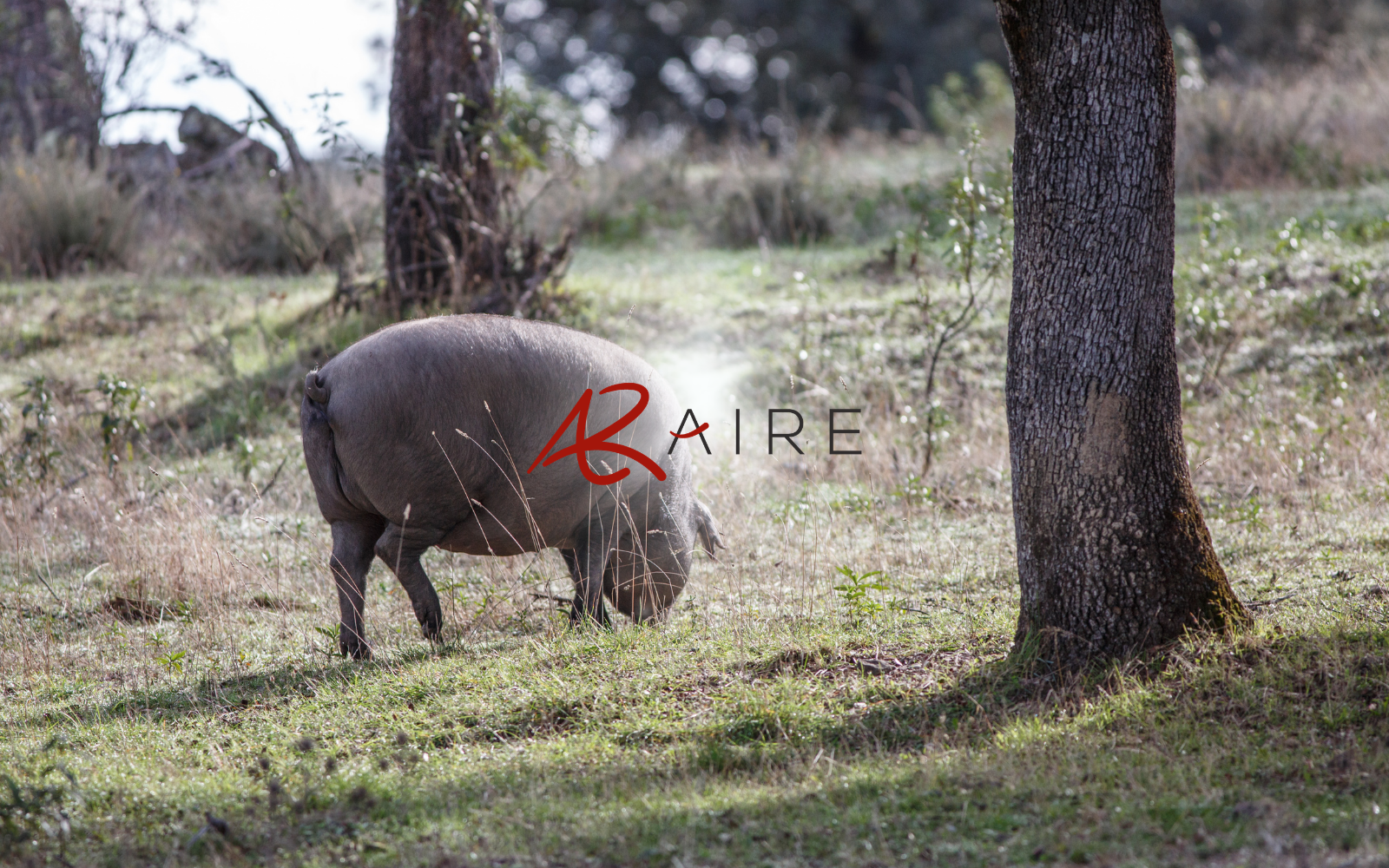
The Dehesa is not just a setting—it is an active ingredient in the final product. Pigs destined for the highest Ibérico grade (Bellota) spend months foraging on acorns, grasses, and wild herbs in this environment. The exercise and the natural diet fundamentally alter the animal's fat composition and muscle development.
For buyers, the Dehesa is also a supply constraint. Its carrying capacity is limited, acorn production varies year to year, and the ecosystem cannot be replicated industrially. This is a core reason why Bellota-grade Ibérico is scarce and commands the prices it does.
The Spanish Quality Framework: Four Labels Under Royal Decree 4/2014
Ibérico pork in Spain is regulated by the Real Decreto 4/2014 (the Norma del Ibérico). Every carcass that enters the market must be classified, sealed with a color-coded tamper-proof tag (precinto) at the slaughterhouse, and registered in the national ÍTACA traceability system.
The classification is based on two independent variables: breed purity (percentage of Ibérico genetics) and diet during the fattening period.
| Label | Official Name | Breed | Diet |
|---|---|---|---|
| Black | Bellota 100% Ibérico | 100% purebred | Acorns + pasture (Montanera) |
| Red | Bellota Ibérico | 50–75% Ibérico | Acorns + pasture (Montanera) |
| Green | Cebo de Campo Ibérico | 50–100% Ibérico | Grain + natural pasture (free-range) |
| White | Cebo Ibérico | 50–100% Ibérico | Grain-fed (intensive) |
An important detail: breed percentage and diet are independent. A 100% purebred Ibérico pig can be grain-fed (Cebo), and a 50% crossbreed can be acorn-fed (Bellota). The label captures both dimensions. When sourcing, always verify the full classification on the seal—not just whether the word "Ibérico" appears on the packaging.
"Pata Negra": Under current regulation, the term "Pata Negra" is reserved exclusively for the 100% Ibérico de Bellota category (black label). Using it for other grades is not permitted and can create compliance issues in certain markets.
Ibérico Pork, Direct from Salamanca
Talk to us about grades, fresh cuts, and export logistics for your market.
Beyond Cured Ham: Fresh Ibérico Pork Cuts
Ibérico is internationally known for its cured products—above all, Jamón Ibérico. But for distributors and HORECA operators, the most dynamic and growing category is fresh Ibérico pork cuts. These offer faster inventory turnover and open up culinary applications well beyond charcuterie.
The most commercially relevant fresh cuts include:
Presa. Extracted from between the shoulder blade and the loin. Heavily marbled, with abundant intramuscular fat. Ideal for grilling as a steak-style cut.
Secreto. Located between the shoulder and the belly, in the "axilla" area. One of the most intensely marbled cuts on the animal—rich, juicy, and highly prized in grill-focused restaurants.
Pluma. A small, elongated cut taken from the end of the loin, near the spine. Leaner than Presa or Secreto but exceptionally tender. Works well for quick searing, carpaccio, or tasting-menu preparations.
Solomillo (Tenderloin). The leanest of the premium cuts, located beneath the loin. Delicate texture, minimal fat. Suited for precise, technique-driven preparations.
Abanico. A flat, fan-shaped cut from the outer rib area. Prominent fat veining gives it a distinctive visual presentation and excellent grilling performance.
Each of these cuts has specific handling and cooking characteristics. For a detailed breakdown, see our full catalogue of fresh Ibérico cuts.
Ibérico vs Conventional Pork: Why the Difference Matters Commercially
For buyers evaluating whether Ibérico pork justifies its price premium, the differences go beyond flavor. They are structural, measurable, and relevant to kitchen performance:
Intramuscular fat. Ibérico pork carries significantly more fat within the muscle than conventional breeds. This marbling is what drives its distinctive texture and flavor—and it is visible to the naked eye.
Cooking yield. The superior fat structure means lower water loss (drip loss) during cooking. In practical terms, an Ibérico cut retains more of its volume and juiciness after cooking than an equivalent conventional cut. For a restaurant, that translates to better plate presentation and less waste.
Fat composition. The oleic acid content in Bellota-grade Ibérico is comparable to olive oil. This is not just a health claim—it changes the physical behavior of the fat: it melts at a lower temperature, coats the palate differently, and oxidizes differently in storage.
Full traceability. Every Ibérico carcass processed under the Norma del Ibérico is registered in the ÍTACA system, providing verifiable traceability from farm to point of export. This level of documentation is rare in the global pork trade and represents a significant due diligence advantage for importers.
Sourcing Ibérico Pork: What to Look For
Whether you are an importer evaluating a new supplier or a chef looking to add Ibérico to your menu, here are the verification points that matter:
The color-coded seal (precinto). Attached at the slaughterhouse, numbered, tamper-proof. This is the primary guarantee of grade and traceability.
The Norma del Ibérico certificate. Confirms breed percentage and diet classification for each batch.
ÍTACA registration. The national traceability system that links the seal number to the animal's full production history.
Export health certificates. Required for international trade. The specific documentation depends on the destination country's import regulations.
Food safety certifications. Look for recognized standards such as IFS (International Featured Standards) or BRC (British Retail Consortium), which are widely accepted across European and international retail channels.
Frequently Asked Questions
What does "Ibérico" actually mean?
Ibérico refers to a specific breed of pig (Cerdo Ibérico) native to the Iberian Peninsula. Under Spanish law, the term can only be used for products from pigs that are at least 50% Ibérico breed. The breed percentage must be declared on the label.
Is "Pata Negra" the same as Ibérico?
Not exactly. "Pata Negra" (black hoof) is a traditional name that, under current regulation, is reserved exclusively for the highest grade: 100% Ibérico de Bellota (black label). It should not be used for other Ibérico categories.
What is the Montanera?
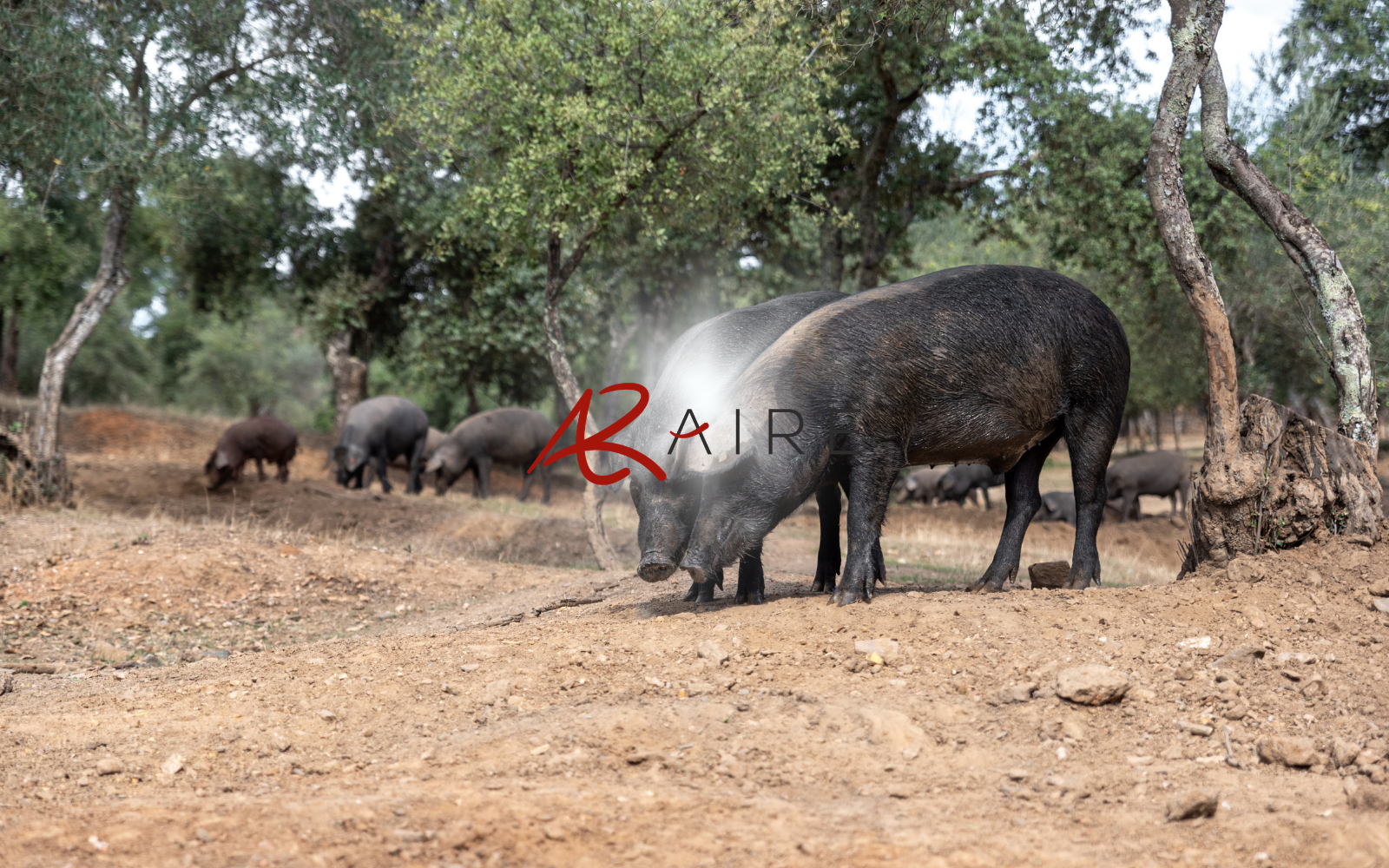
The Montanera is the acorn-fattening season, running approximately from October to February. During this period, pigs destined for the Bellota classification feed freely on acorns and pasture in the Dehesa. The quality and duration of each Montanera directly affects Bellota supply and pricing.
Is Ibérico pork only available as cured ham?
No. While Jamón Ibérico is the most internationally recognized product, Ibérico pork is available as a full range of fresh cuts—Presa, Secreto, Pluma, Solomillo, Abanico, and more—as well as cured loins, sausages, and other processed products.
What makes Ibérico pork more expensive than conventional pork?
Several factors: a slower-growing heritage breed, longer production cycles, limited Dehesa land for Bellota-grade animals, strict regulatory compliance, and individual traceability for every carcass. The supply of the highest grades is structurally limited, which sustains the price premium.
How do I verify that an Ibérico product is authentic?
Check for the color-coded seal (precinto), request the Norma del Ibérico certificate, and verify ÍTACA traceability registration. These are the official mechanisms established by Spanish law to guarantee grade and origin.
How do I start sourcing Ibérico pork?
Contact the AIRE Ibérico Meat team with details about your market, the grades and cuts you're interested in, and your estimated volumes.
Ibérico Pork, Direct from Salamanca
Talk to us about grades, fresh cuts, and export logistics for your market.