
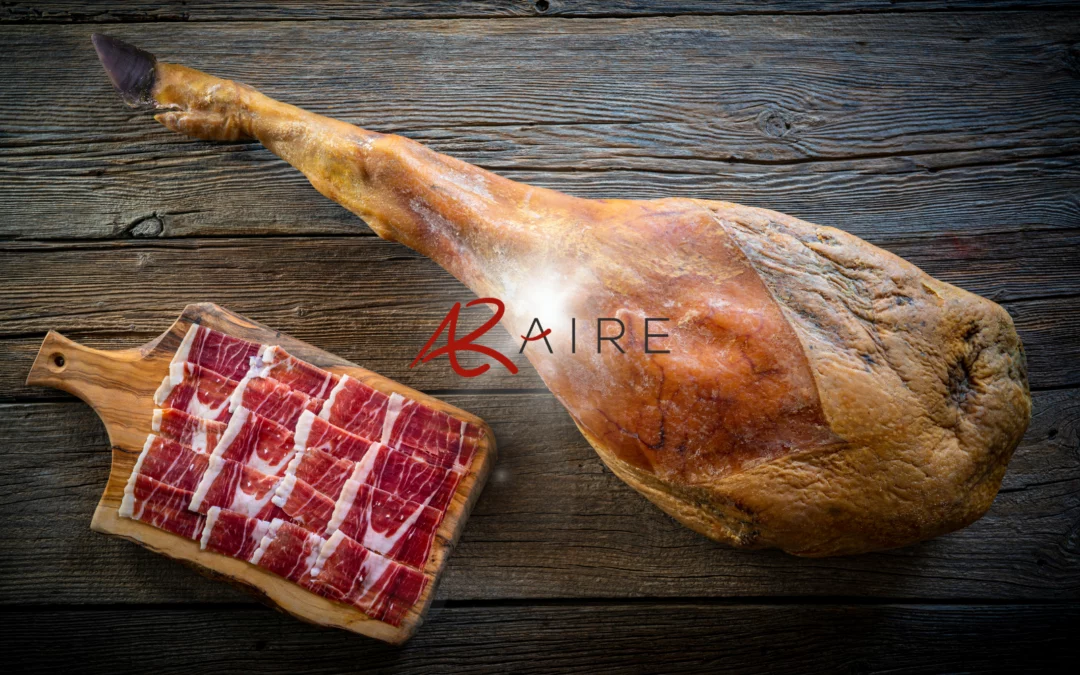
If you're comparing Bellota vs Cebo for the first time, the short answer is simple: Bellota comes from Ibérico pigs fattened on acorns in the wild Dehesa, and Cebo comes from Ibérico pigs fed on grain. That single difference in diet changes everything—flavor, fat composition, texture, price, and how each grade performs in a professional kitchen or retail setting.
But the real story goes much deeper. Spain regulates Ibérico pork under one of the strictest food classification systems in the world (Royal Decree 4/2014), and understanding that system is the difference between making an informed purchase and overpaying for the wrong product.
One important nuance: breed percentage and diet are independent variables. You can have a 100% purebred Ibérico pig raised on grain (Cebo), and a 50% crossbreed raised on acorns (Bellota). The label captures both. When evaluating a product, always check the seal for the full classification—not just the word "Ibérico."
A common mistake among first-time importers is assuming "Ibérico" on a label automatically means Bellota. It does not. Without the color-coded seal and ÍTACA registration, there is no way to verify the grade independently. Always request the official Norma del Ibérico certificate before committing to a supply agreement.
What Is Ibérico de Bellota?
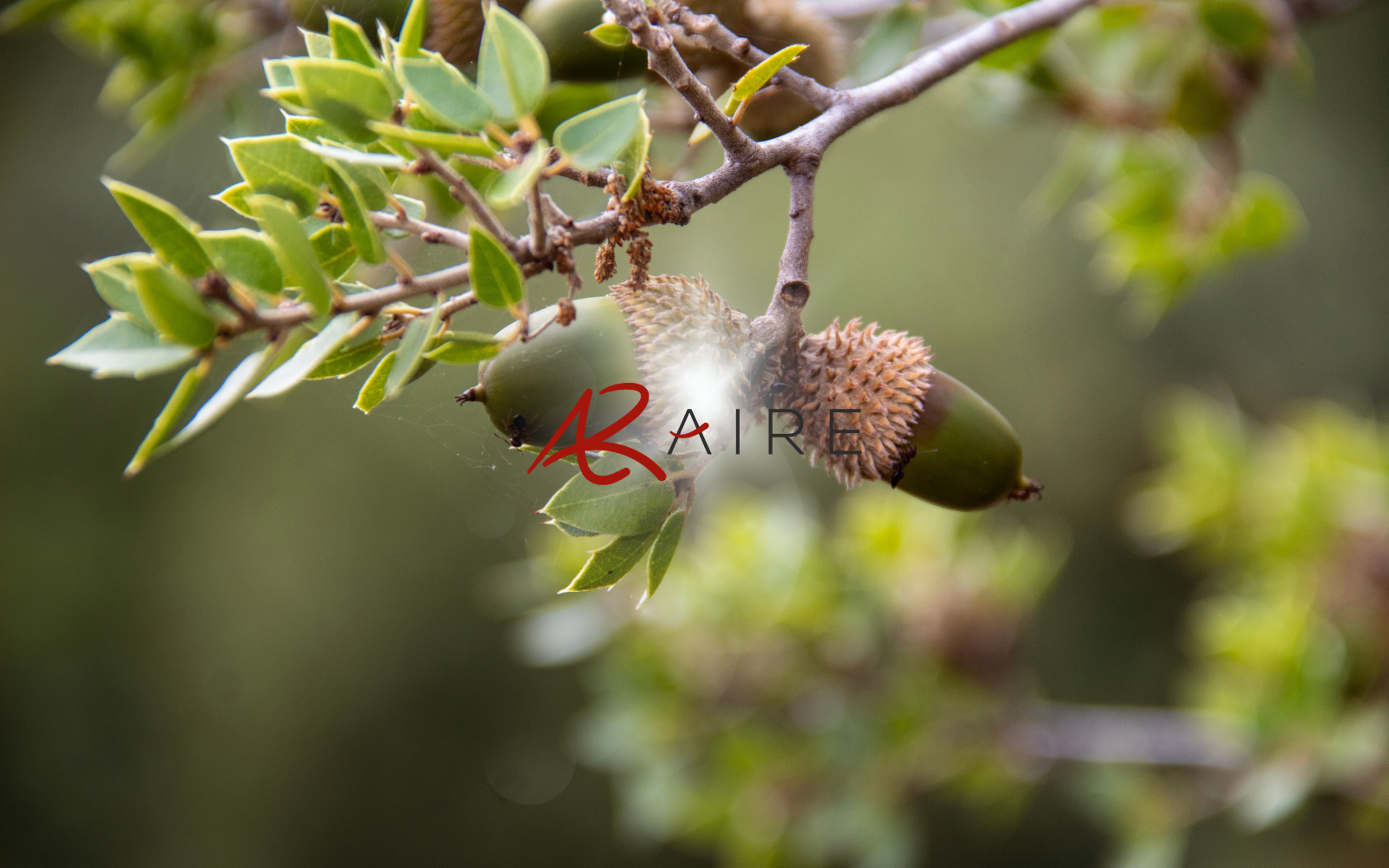
Bellota—Spanish for "acorn"—is the highest grade of Ibérico pork. It refers specifically to pigs that spend their final fattening phase (the Montanera, typically October through February) roaming freely in the Dehesa, eating acorns alongside wild grasses and herbs.
This is not a marketing story. The acorn diet triggers a measurable chemical transformation in the animal's fat. Ibérico de Bellota pork contains exceptionally high levels of oleic acid—the same monounsaturated fatty acid found in olive oil. This gives the fat a lower melting point, which produces the signature "melt-in-your-mouth" texture that has made Bellota famous worldwide.
Why Bellota Commands a Premium Price
The economics of Bellota are driven by scarcity. The Montanera season is finite (roughly four months), the Dehesa has a limited carrying capacity, and the number of pigs that qualify for the Bellota classification each year is a small fraction of total Ibérico production. This creates genuine supply constraints that explain the price differential:
- Longer production cycle: A Bellota pig lives significantly longer than a Cebo pig before reaching slaughter weight. That means more land, more time, and higher costs per animal.
- Seasonal dependency: Acorn yields fluctuate with rainfall and temperature. A poor Montanera directly reduces Bellota supply for the year, which drives prices up.
- Higher intramuscular fat: Bellota cuts carry significantly more intramuscular fat than Cebo, which means exceptional flavor but also faster oxidation and more demanding cold chain requirements.
For distributors and importers, Bellota is the product you build a premium brand around. If your clients are high-end restaurants, luxury delicatessens, or gourmet retailers, this is your flagship offering. But it requires careful supply planning—securing allocation early in the season is critical, because once the Montanera ends, what's available is all there is until the next year.
→ Exploring Bellota cuts? See our full catalogue of fresh Ibérico pork cuts.
What Is Ibérico de Cebo?
Ibérico de Cebo refers to Ibérico pigs raised on a controlled diet of cereals and legumes, without the acorn-finishing phase. Within this category, there is an important distinction:
- Cebo (white label): Grain-fed in a more intensive setting. This is the most accessible entry point to Ibérico pork.
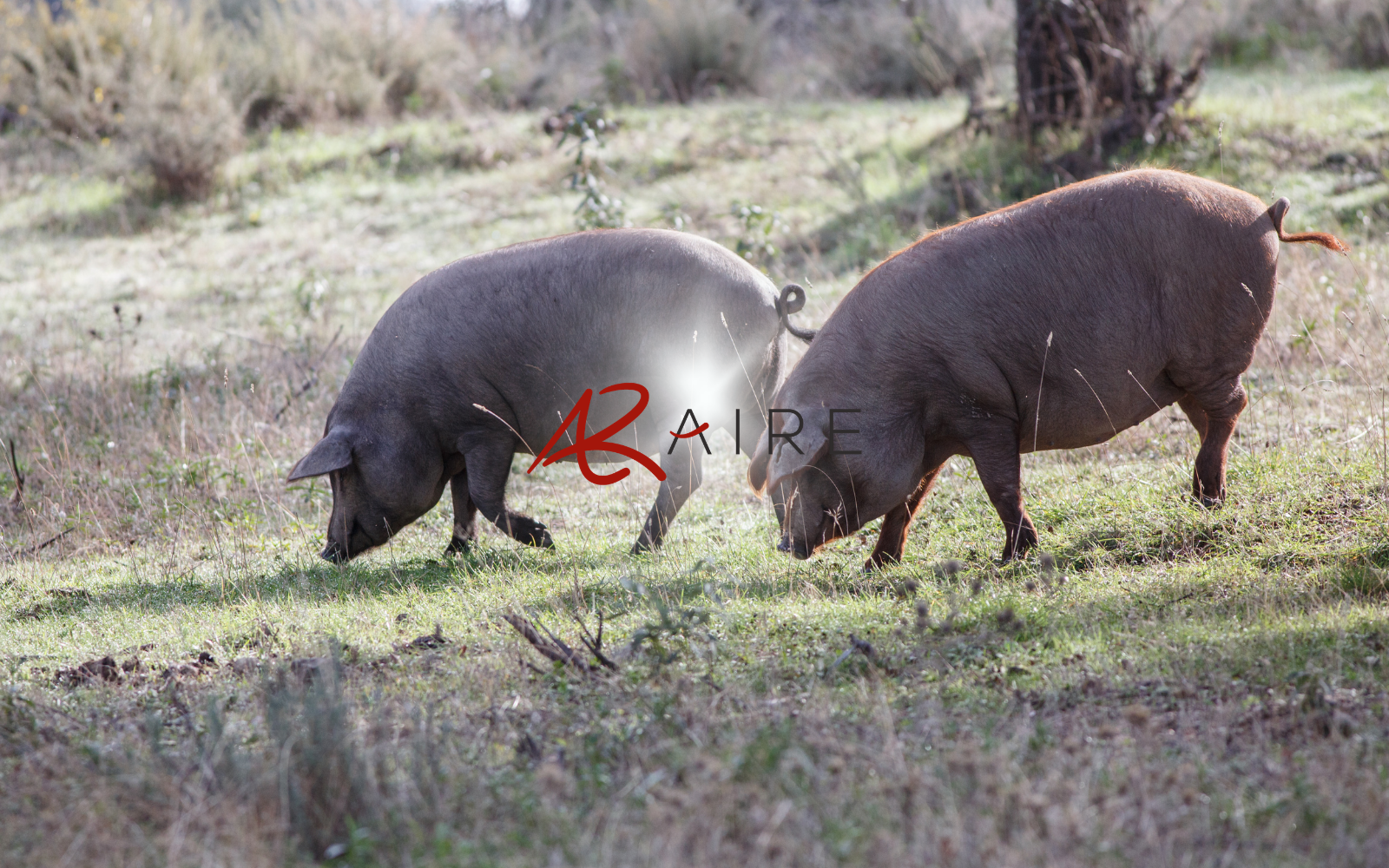
- Cebo de Campo (green label): Grain-fed, but raised outdoors in the Dehesa with access to natural pasture. The free-range lifestyle produces slightly more complex flavor and better fat infiltration than standard Cebo.
It's worth emphasizing: even a white-label Cebo Ibérico pig is genetically a different animal from conventional pork breeds. The Ibérico breed naturally deposits fat intramuscularly in a way that Duroc, Large White, or Landrace breeds simply do not. This is why even Cebo-grade Ibérico clearly outperforms conventional pork.
The Case for Cebo in Professional Kitchens
If Bellota is the product you build a brand around, Cebo is the product you build a business around. Here is why:
Price predictability. Unlike Bellota, which fluctuates with acorn yields and Montanera conditions, Cebo pricing is tied to grain markets—more stable and easier to forecast for annual purchasing budgets.
Year-round availability. There is no seasonal bottleneck. Cebo Ibérico is produced continuously, which means consistent stock for distributors and restaurants alike.
Standardized performance in the kitchen. Chefs working with Cebo get more uniform fat infiltration across batches. That translates to predictable cook times, consistent portion control, and fewer surprises during service.
Margin flexibility. The lower purchase price allows distributors and restaurants to maintain healthy margins while still offering an authentically premium product. Ibérico Cebo cuts like the Secreto Extra or the Presa deliver an exceptional quality-to-cost ratio.
→ Interested in Ibérico for HORECA? Contact our team to discuss grades, cuts, and availability for your market.
Bellota vs Cebo: Side-by-Side Comparison
When sourcing fresh Ibérico pork cuts, the grade you choose has a direct impact on flavor, handling, shelf life, and what your end customer expects. Here is how they compare across the factors that matter most in a commercial context:
| Factor | Bellota (Black / Red Label) | Cebo (White / Green Label) |
|---|---|---|
| Intramuscular fat | High. Intense marbling. | Moderate. More uniform distribution. |
| Oleic acid | Very high (comparable to olive oil) | Present, but lower than Bellota |
| Flavor profile | Complex, nutty, with sweet and herbal notes from the Dehesa diet | Clean pork flavor with good depth. Less complexity, more consistency. |
| Fat oxidation | Faster. Requires strict cold chain and expert handling. | More stable. Greater tolerance in logistics. |
| Supply | Seasonal. Limited by Montanera and Dehesa capacity. | Year-round. Scalable production. |
| Price | Premium to ultra-premium | Mid-premium to premium |
| Best market fit | Fine dining, tasting menus, luxury retail | Quality restaurants, premium grills, high-volume HORECA |
A common strategy in the import market is to carry Bellota for the flagship product line (where brand story and prestige matter) and Cebo or Cebo de Campo for the volume line (where consistency and margin matter). The two grades serve different segments of the same portfolio.
What Is the Montanera and Why Does It Matter?
The Montanera is the natural acorn-fattening season in the Spanish Dehesa, running roughly from October to February (sometimes into March, depending on the year). During this period, Ibérico pigs destined for the Bellota classification roam freely across the oak woodland, eating acorns (bellotas) from holm oaks (encinas) and cork oaks (alcornoques), along with grasses, roots, and herbs.
The pigs must gain a significant percentage of their body weight during the Montanera through natural feeding alone—no supplementary feed is permitted. The result is a profound change in the animal's fat composition, which is what ultimately defines Bellota quality.
For buyers, the Montanera has a direct commercial implication: it determines annual Bellota supply. A dry autumn with fewer acorns means fewer pigs qualify for the Bellota grade, which tightens availability and pushes prices. This is why experienced importers secure their Bellota allocations well in advance.
How to Verify Ibérico Pork Certification
Fraud in the Ibérico sector has historically been a problem. The introduction of the ÍTACA system and stricter enforcement under Royal Decree 4/2014 changed this, but as a buyer—especially an international buyer—verification should still be part of your sourcing process.
Here is what to check:
The color-coded seal (precinto): Every individual piece of certified Ibérico pork must carry a numbered, tamper-proof seal that was attached at the point of slaughter. The color indicates the grade (black, red, green, or white), and the number is traceable through the ÍTACA database.
The Norma del Ibérico certificate: Any legitimate supplier should be able to provide this on request. It confirms the breed percentage, diet classification, and traceability chain for each batch.
Inspection body registration: The supplier should be audited by an accredited certification body (entidad de inspección). In Spain, these bodies are authorized by the Autonomous Community government where the production takes place.
Frequently Questions About Bellota and Cebo
What does "Bellota" mean in Ibérico pork?
Bellota is the Spanish word for "acorn." In the context of Ibérico pork, it refers to pigs that were fattened exclusively on acorns and natural pasture during the Montanera season in the Dehesa. Only pigs that complete this natural fattening phase and meet the regulatory requirements can carry the Bellota classification (black or red label).
Is Bellota always better than Cebo?
"Better" depends entirely on the application. Bellota offers a more complex flavor profile and higher fat infiltration—ideal for fine dining and premium retail. For high-volume HORECA, Cebo provides the consistency, price stability, and year-round availability that Bellota cannot. Many distributors carry both grades, each serving a different market segment.
What is the difference between Cebo and Cebo de Campo?
Both are grain-fed, but Cebo de Campo pigs are raised outdoors in the Dehesa with access to natural pasture and space to exercise. Standard Cebo pigs are raised in a more intensive setting. The free-range lifestyle of Cebo de Campo produces slightly better fat infiltration and a more nuanced flavor. In the label system, Cebo de Campo carries a green seal; standard Cebo carries a white seal.
How should fresh Ibérico pork be stored?
Bellota cuts, with their higher unsaturated fat content, are more prone to oxidation and require strict refrigeration. Cebo cuts are more stable. In both cases, vacuum packaging and controlled temperature are essential. For long-term storage, blast freezing or IQF (Individual Quick Freezing) is recommended. Specific shelf life will depend on the cut, packaging method, and storage conditions—always consult your supplier for detailed specifications.
What certifications should I request when importing Ibérico pork?
At minimum: the Norma del Ibérico certificate confirming grade and breed percentage, ÍTACA traceability registration, and the EU health certificate for export. Depending on the destination country, additional phytosanitary documentation or plant-specific approvals may be required.
What is the ÍTACA system?
ÍTACA is the Spanish national traceability system for Ibérico products. It tracks each animal from birth through slaughter and processing, recording breed percentage, diet classification, and certification status. Every color-coded seal on an Ibérico product is linked to an ÍTACA record. For importers, it is the most reliable way to verify that what you are buying matches the claimed grade.
What is the Montanera season?
The Montanera is the acorn-fattening period that typically runs from October to February in the Dehesa. During this time, Bellota-grade pigs feed freely on acorns and natural pasture. The quality and duration of each year's Montanera directly affects Bellota supply and pricing for that season.
How do I start sourcing Ibérico pork for my business?
Contact the AIRE Ibérico Meat team with details about your market, the grades and cuts you're interested in, and your estimated volumes. We will work with you to find the right solution.
Source Ibérico Pork Directly from Salamanca
Whether you need Bellota for your premium line or Cebo for volume distribution, talk to us about grades, cuts, and export logistics.