
The Cycle That Defines Bellota Iberian Pork: the Montanera
What is the Montanera and Why Does it Determine the Commercial Value of Iberian Pork?
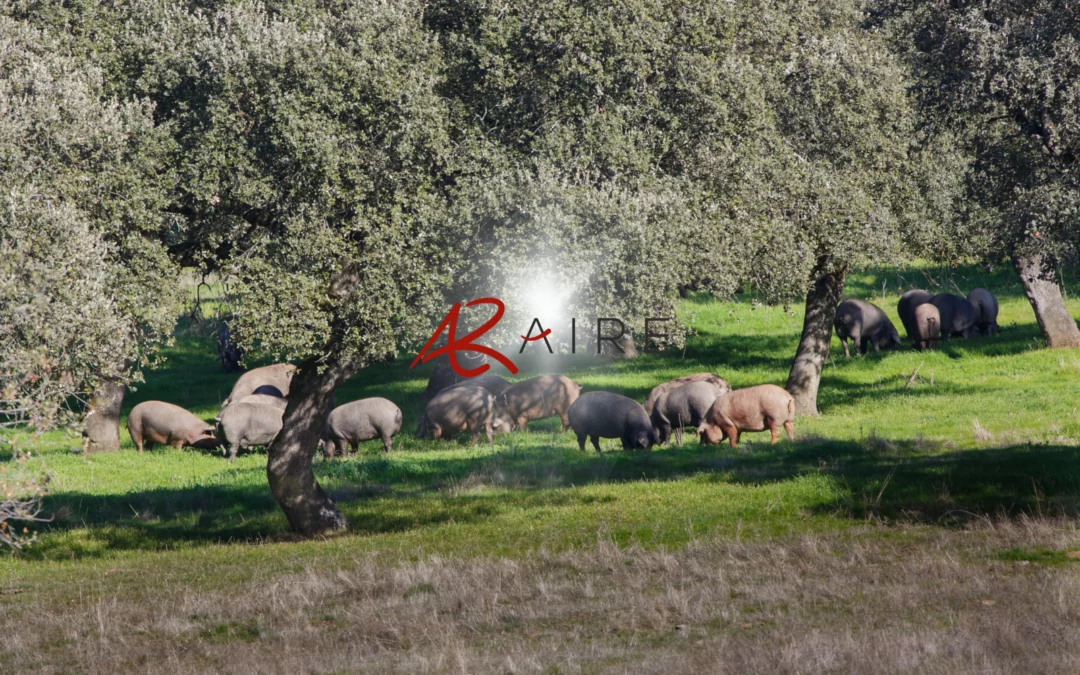
The difference between a decent Iberian product and an exceptional one is settled in just 120 days: the Montanera. This period, running from October through February, is the phase in which the Iberian pig feeds on acorns and natural pasture across the Dehesa — Spain's ancient oak woodland — transforming its fat composition, texture and commercial classification.
The Montanera season explained plainly is this: a free-range fattening system in which diet, physical activity and landscape work together to produce intramuscular fat infiltration, a lipid profile rich in oleic acid and a superior sensory experience. It is not a decorative tradition; it is the technical and regulatory backbone of Bellota Iberian pork — the highest tier under Spanish Royal Decree 4/2014.
Production Calendar: from October Entry Weight to the Optimal Slaughter Point
The Montanera does not begin by the calendar alone — it begins when the acorns do. Once holm oaks and cork oaks release enough fruit, the animal — entering the Dehesa at a live weight of between 80 and 110 kg — starts a natural fattening cycle that requires daily monitoring of stocking density, feed availability and weight progression.
October and November mark the progressive entry of animals into free-range conditions. December and January concentrate peak acorn consumption and the highest rate of weight gain. February closes the operational cycle: by this point, each animal must have accumulated the minimum gain required by regulation — no less than 46 kg during the free-range phase — and reached the conditions necessary for slaughter and classification as Bellota.
The Dehesa as Productive Infrastructure: Stocking Density and Final Quality
The Dehesa is not a rural backdrop; it is a high-value agro-pastoral system. The balance between tree cover, natural pasture and available surface per animal determines the final quality of the product as directly as breed or slaughter weight. Spain's Protected Designations of Origin — Jabugo, Guijuelo, Dehesa de Extremadura and Los Pedroches — are, in practice, guarantees that this infrastructure meets the most exacting standards set out in the regulation.
Stocking density is the variable that most directly affects individual access to acorns. Excessive density reduces each animal's share of natural feed and breaks the productive logic that makes Bellota Iberian pork what it is. Fewer animals per hectare means more natural food, greater daily movement and a finer, more stable and homogeneous intramuscular fat infiltration.
Acorn and Oleic Acid: the Chemistry You Taste and the Lab Results You Can Show Buyers
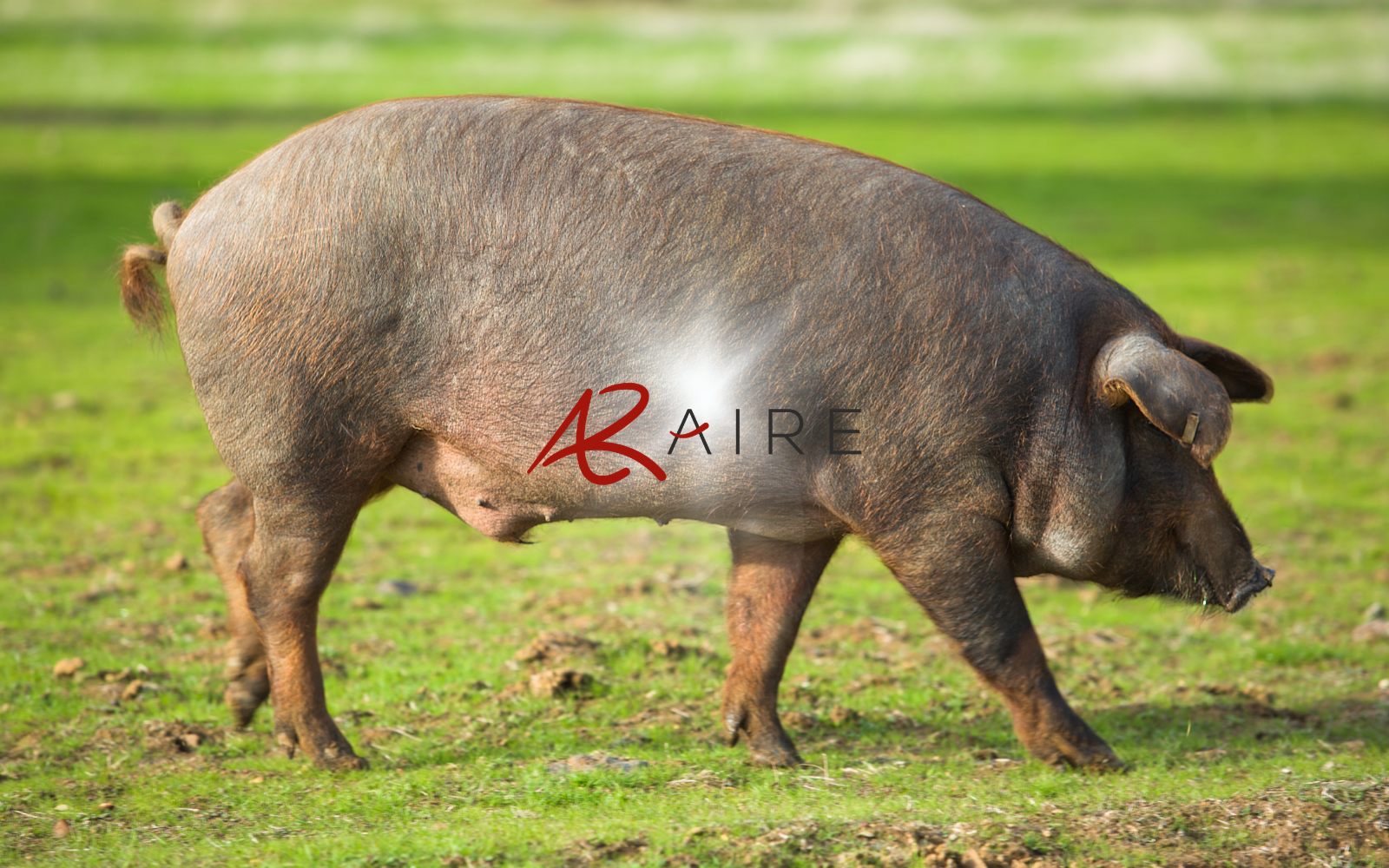
Acorns deliver a high-energy load rich in monounsaturated fats, with oleic acid as the dominant component. During the Montanera, this diet reshapes the animal's lipid profile: oleic acid content in the fat accumulates to levels typically between 55% and 60% of total fatty acids — comparable to those found in extra-virgin olive oil.
The outcome goes beyond flavour. The fat of Bellota Iberian pork has a demonstrably superior culinary performance: better moisture retention, a lower melting point, less heaviness on the palate and a more elegant integration between muscle fibre and intramuscular fat. For buyers supplying Michelin-starred kitchens or premium retail, this verifiable lipid profile is a technical sales argument, not a marketing claim.
Free-Range Exercise: the Factor No Intensive System Can Replicate
An Iberian pig during the Montanera covers between 6 and 8 kilometres a day foraging for acorns, roots and pasture. That sustained movement develops muscle fibre, promotes intramuscular infiltration and prevents the flat, superficial fat accumulation that characterises confinement-reared pigs.
In intensive systems, animals gain weight without that physical stimulus. In the Dehesa, every day of movement converts natural feed into muscular structure, aromatic complexity and genuine culinary performance. The difference is not only perceptible on the plate — it is traceable from the slaughter batch analysis.
The Colour-Coded Labelling System and Royal Decree 4/2014: Traceability That Supports Procurement Decisions
Spanish Royal Decree 4/2014 translates the productive reality of the Montanera into a clear identification system using colour-coded tags, known as bridas. The Bellota category is tied to animals raised in free-range conditions during the Montanera, with full documentary traceability covering breed, feeding and management from the Dehesa to the slaughterhouse.
The Black tag identifies 100% Iberian Bellota pork, while the Red tag corresponds to Iberian Bellota with the different breed percentages permitted under the regulation. The Green tag (Cebo de Campo, field-grazed and grain-fed) and the White tag (Cebo, conventionally fed) complete the system and allow objective category comparison. For professional buyers, this coding eliminates ambiguity in procurement, simplifies pricing and facilitates positioning on menus, retail shelves or import catalogues.
Secure Montanera Product with Full Traceability
Bellota quality starts in the Dehesa and is protected through batch control, cut selection and logistics planning. Contact the AIRE export team to receive availability, formats and terms tailored to your distribution channel.
Montanera and Profitability: Translating the Cycle's Value into the Professional Channel
Impact on Food Cost, Margin and Premium Positioning
Bellota Iberian pork enables a premium proposition without the commercial rigidity of luxury products with narrower culinary versatility. Its perceived value is high, its base of informed customers is well established across European and Asian markets, and its range of cuts allows for flexible work across different price points, grammes and distribution channels.
For distributors, foodservice operations and specialist retailers, the Montanera delivers a clear commercial advantage: more auditable selling arguments, stronger differentiation against other premium proteins and a higher potential rotation compared to exotic references with a thinner demand base. The product does not rely on prestige alone — it stands up in flavour, documentary traceability and consistent culinary performance.
IQF Freezing: Year-Round Bellota Supply Without Compromising Quality
The Montanera is seasonal. Professional supply does not have to be. IQF (Individual Quick Freezing) technology locks in the peak quality of cuts obtained during the acorn cycle and maintains availability across all twelve months of the year.
IQF freezes each piece individually at ultra-high speed, preventing the formation of large ice crystals that would rupture the intramuscular fat structure. The result is a product that, after correct thawing, retains the culinary behaviour, lipid profile and texture of the fresh cut. For HORECA buyers, international importers and distribution platforms, IQF converts a time-limited campaign into predictable, year-round supply planning.
Compliance, Documentary Traceability and Demanding Supply Chain Management
The advantage of Bellota Iberian pork does not end with organoleptic quality. Its regulated identification framework, batch documentation and national traceability system — overseen by ASICI (the Interprofessional Association of the Iberian Pig) — facilitate audits, supplier qualification processes and incident management in supply chains with high compliance requirements.
In international markets with strict import controls — post-Brexit United Kingdom, Asian markets, premium retail channels in Germany or Switzerland — this documentary clarity reduces operational friction significantly. The buyer does not simply acquire premium meat; they gain a product with a verifiable provenance story, technical backing and a regulatory structure that is fully auditable at source.
FAQ: The Montanera Season Explained for Professional Buyers
When does the Montanera start and when does it end?
The Montanera typically runs from October through February, coinciding with the natural fall of acorns across the Dehesa. The operational start depends on the actual availability of fruit, pasture maturity and the entry of animals at the appropriate live weight — usually between 80 and 110 kg. The cycle closes once each pig has completed its free-range fattening phase, accumulated the minimum weight gain required by Royal Decree 4/2014 and met the conditions for slaughter and classification as Bellota Iberian pork.
Do all Iberian pigs go through the Montanera season?
No. Only animals destined for Bellota categories — identified with a Black tag (100% Iberian) or Red tag (permitted breed cross percentages) — complete the Montanera phase in free-range conditions, fed on acorns, natural pasture and Dehesa resources. Cebo de Campo pigs (Green tag) and Cebo pigs (White tag) follow different feeding and management systems and do not achieve the same intramuscular fat infiltration, aromatic profile or commercial classification.
Why do acorns have such a significant impact on the flavour and texture of Iberian pork?
Acorns alter the lipid composition of the Iberian pig during the Montanera. Their richness in monounsaturated fats — particularly oleic acid — raises the proportion of this fatty acid in the animal's fat to levels comparable to those in extra-virgin olive oil. This change is experienced on the palate as greater juiciness, a more yielding texture and a longer, cleaner and more complex flavour. Combined with the daily physical activity across the Dehesa, which develops musculature and promotes intramuscular infiltration, the result is a product that no confinement-reared system can match.
What is the difference between Iberian Bellota and Iberian Cebo pork?
Iberian Bellota pork comes from animals raised in free-range conditions during the Montanera, fed on acorns and natural Dehesa pasture, with traceability regulated by Spanish Royal Decree 4/2014. Iberian Cebo pork comes from animals fed on authorised compound feeds in more intensive production systems. The difference is directly traceable through lipid analysis and manifests in distinct fat infiltration, flavour, texture, price per kilogram and positioning within the sales channel.
Can Bellota Iberian pork be supplied outside of the Montanera season?
Yes. Year-round availability is managed through campaign planning, batch selection and IQF freezing of premium cuts obtained during the acorn cycle. The IQF system preserves the intramuscular fat structure, lipid profile and culinary behaviour of the product. For distributors, foodservice operators and importers, this mechanism enables consistent supply of Bellota Iberian pork across all twelve months of the year, with guaranteed origin quality.
How does the Montanera affect the final price of Iberian pork products?
The Montanera increases production cost because it requires certified Dehesa land, low stocking densities, natural feed management and a production cycle constrained by seasonality. These factors raise the price per kilogram relative to cebo categories, but they also increase perceived quality, market differentiation and margin potential in premium channels — starred restaurants, specialist retail, import distribution — where a verifiable production story is a direct commercial asset.