
The Meaning of Pata Negra: What It Really Is and What It Isn't
The Most Exploited Term in the Ibérico Market — and the Most Misused
"Pata negra" isn't an official category, yet it remains the most heavily exploited buzzword in the Ibérico market. Its indiscriminate use—spanning supermarket aisles, restaurant menus, and import platforms across Europe—has generated genuine confusion, even among seasoned professional buyers within the industry.
The strictly correct meaning of pata negra is crystal clear and leaves no room for interpretation: it refers exclusively to 100% purebred Iberian pigs fattened during the montanera season on a diet of acorns and natural resources from the dehesa (oak forest), marked with a black tag according to the classification system of Royal Decree 4/2014. Anything else is mere marketing noise that chips away at the true product's value and creates friction within the supply chain.
Origin of the Term "Pata Negra": A Physical Trait, Not a Quality Standard
The expression stems from a morphological trait: the dark pigmentation of the hoof often found in purebred Iberian pigs. However, this feature is neither exclusive to the Iberian breed nor a guarantee of racial purity or feed quality. There are dark-hooved pigs that aren't pure Ibérico, just as there are 100% pure Ibérico pigs with lighter-colored hooves.
For decades, before a regulated classification system existed, the market embraced the phrase as a shorthand for top-tier Ibérico quality. Today, with the RD 4/2014 regulatory framework fully in place, taking the term out of context isn't just inaccurate. In certain European markets like France, where "pata negra" is casually slapped onto any quality cured ham, it sparks extra confusion that complicates the positioning of genuine Spanish products.
The Only Technically Valid Definition: The Black Tag Under Royal Decree 4/2014
Royal Decree 4/2014, which lays out the Quality Standard for Ibérico meat, ham, shoulder, and loin, establishes a classification framework built on two variables: breed and diet. Within this system, the black tag (brida negra) identifies the only product that warrants the legitimate and technically sound use of the "pata negra" concept.
This requires the simultaneous fulfillment of two non-negotiable conditions: 100% Ibérico racial purity—verifiable through the Iberian Pig Herd Book managed by AECERIBER—and a montanera feeding regime based on acorns and natural dehesa forage during the free-range fattening phase. Lacking either of these two variables instantly disqualifies the product from this category, regardless of its sensory quality or how it's marketed.
The Most Common Classification Mistakes in the Professional Channel
The most widespread mistake among distributors and HORECA operators is using "pata negra" as a blanket term for any high-quality Ibérico ham, without differentiating breed or feeding systems. This habit dilutes the authentic product's prestige, breeds distrust among educated consumers, and creates price disparities that complicate negotiations with demanding clients.
There is a second, subtler, but equally troublesome error: applying the term to red tag products—acorn-fed Ibérico with 50% or 75% racial purity. While undeniably high quality, they do not meet the racial purity requirement of the black tag. Lumping both under the same "pata negra" umbrella makes it impossible to build a coherent, profitable, tiered offering, particularly in premium markets dealing with technically informed buyers.
Pata Negra vs. Red Tag Acorn-Fed Ibérico Ham: The Distinction That Dictates Price
Not all acorn-fed (Bellota) Ibérico is "pata negra." The Bellota quality grade allows for two levels of racial purity within the official system, and that split directly impacts classification, pricing, and positioning.
An acorn-fed Ibérico with 50% or 75% racial purity—resulting from controlled crossbreeding with the Duroc breed—boasts exceptional sensory quality and meets all montanera requirements, but it receives a red tag. The contrast with the black tag isn't just about pedigree: it alters the intramuscular fat profile, the curing times for long-aged products, and the perception of exclusivity in top-tier pricing channels. For distributors and fine dining, this distinction directly affects pricing strategy and product narrative.
Impact on Price, Margin, and Market Positioning
Using the term with technical accuracy has a direct, measurable impact on pricing. Black tag products sit at the absolute pinnacle of the Ibérico market for three structural reasons: limited production due to the scarcity of certified dehesa for 100% purebreds, higher montanera costs because of the lower permissible livestock density, and extended curing times required for large cuts like hams and shoulders.
For specialty retail and restaurants, applying this naming convention precisely justifies premium price tags without commercial friction or customer pushback. Consistency across official classification, sales pitch, and the product itself is the one argument that cannot be refuted. In mature markets—like Germany, Switzerland, Japan, or the UK—institutional buyers already verify this alignment before sealing a deal.
How to Verify an Authentic Pata Negra Product
Spotting a true "pata negra" doesn't rely on hoof color or packaging claims. It rests on verifiable elements within the regulated Ibérico classification system and the batch's documentary traceability.
Three validation keys for professional buyers:
- A physical black tag visible on the piece, featuring the operator's identification code and the registered batch number.
- Labeling compliant with RD 4/2014, explicitly stating "100% raza ibérica" (100% Iberian breed) and "alimentación con bellota" (acorn-fed).
- Montanera traceability documentation, detailing the origin of the dehesa, the free-range fattening period, and slaughterhouse data—mandatory during supplier onboarding processes.
Dehesa and Montanera: The Conditions the Authentic Product Cannot Bypass
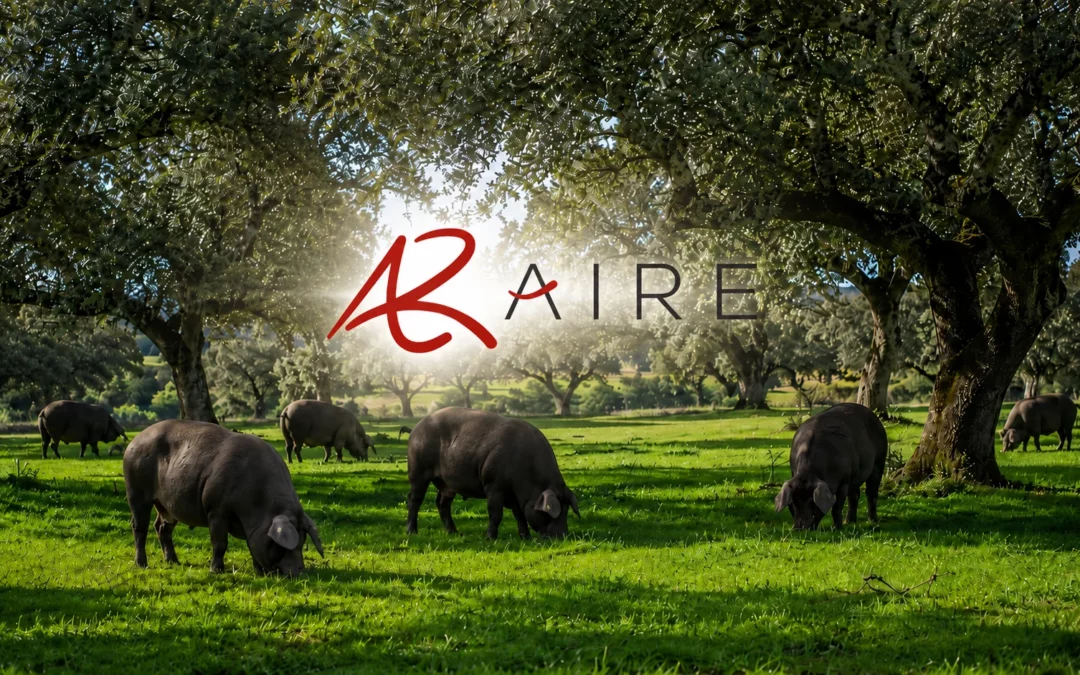
The core essence of pata negra is inextricably linked to the dehesa and the montanera. Without this specific agro-pastoral ecosystem and the free-range acorn-fattening process, there is simply no equivalent product in any other pig farming system worldwide.
The animal requires certified dehesa acreage—the Denominations of Origin Jabugo, Guijuelo, Dehesa de Extremadura, and Los Pedroches represent the ultimate territorial expression of this rule—actual acorn availability during the montanera, and daily treks of 6 to 8 km to develop the intramuscular fat profile that defines the category. There are no industrial shortcuts capable of replicating this blend of factors.
Source Ibérico with Clear, Unambiguous Classification
Avoid positioning errors and ensure portfolio consistency. Reach out to the AIRE team to access certified cuts with full traceability and official classification.
Pata Negra in Commercial Strategy: How to Use the Term to Sell Better, Not Worse
Correct Use in Specialty Retail and the HORECA Channel: Classification by Tags, Not Ambiguous Labels
Wielding the term "pata negra" with technical precision boosts brand credibility and wipes out the risk of clashing with educated consumers. In mature markets—particularly in benchmark gastronomy and premium retail—the end client already spots the difference between a product backed by an official system and one using the phrase as an empty marketing gimmick.
A robust commercial strategy in the Ibérico segment builds its offering around the tag system: black for peak exclusivity, red for highly accessible premium acorn-fed quality, green and white for higher rotation slots. This portfolio architecture allows businesses to construct logical price tiers, communicate on menus and shelves without ambiguity, and manage margins per segment with technical rigor.
The Real Risks of Misinterpreting the Term
Misusing "pata negra" triggers two tangible business problems. First is the loss of trust: when a professional buyer or savvy consumer spots a mismatch between the marketing claim and the official classification, the perceived value of both the product and the vendor plummets instantly. In markets where reputation is built at a crawl, that damage is hard to undo.
The second issue is price distortion. Passing off lower-category products as "pata negra" squeezes the margins of vendors who actually stock authentic black tag goods, forcing unnecessary technical justifications during purchasing processes that ought to be seamless. In export scenarios, where buyers might be less familiar with the Spanish system but strictly demand paperwork, this inconsistency can straight-up derail vendor approval.
Technical Clarity as a Competitive Advantage in Export and International Distribution
Operators who communicate with technical accuracy gain a concrete edge over competitors leaning on vague storytelling. Explaining exactly what "pata negra" means—and backing that up with the tag system, montanera traceability, and batch paperwork—positions the item as a verifiable premium product, not a label of convenience.
In demanding export environments, this transparency streamlines audits, speeds up supplier onboarding, and smooths negotiations in channels where price is justified by technical facts, not fiction. The international buyer—whether an importer in Tokyo, a distributor in Berlin, or a retail chain in London—isn't looking for a fairytale; they want alignment between classification, traceability, and price. They find exactly that in the official Spanish system when operators use it correctly.
FAQ: The Meaning of Pata Negra in the Ibérico Market
Is "pata negra" an official category recognized by Spanish regulations?
No. "Pata negra" is a colloquial term with no legal standing in the Ibérico classification system. The only legally binding classification in Spain is the one established by Royal Decree 4/2014, which outlines four categories color-coded by tags: black (100% acorn-fed Ibérico), red (acorn-fed Ibérico with lower racial purity), green (free-range grain-fed / cebo de campo), and white (grain-fed / cebo). Using "pata negra" in labeling or advertising without grounding it in the official classification can spark regulatory pushback and alienate technically knowledgeable buyers.
Can any Ibérico ham be called "pata negra"?
No. Only ham sourced from a 100% purebred Iberian pig, fattened during the montanera on a diet of acorns and natural dehesa resources, and bearing a black tag under RD 4/2014, technically warrants the term. An acorn-fed Ibérico ham with 50% or 75% purity—red tag—is of exceptional quality but falls outside this definition. An Ibérico cebo ham—white tag—has absolutely no technical ties to the concept, regardless of its marketing.
Does hoof color guarantee the product is "pata negra"?
No. A dark-pigmented hoof is a common physical trait in purebred Iberian pigs, but it is neither a reliable nor a sufficient verification standard. There are dark-hooved pigs that aren't pure Ibérico, and purebreds with lighter hooves. Proper validation relies on three elements: the official physical black tag on the cut, RD 4/2014 compliant labeling explicitly stating breed and diet, and the corresponding batch's montanera traceability paperwork.
What is the difference between a black tag and a red tag in acorn-fed Ibérico?
Both categories represent acorn-fed Ibérico (Bellota)—pigs fattened free-range on acorns and natural dehesa resources—but they differ in pedigree. The black tag denotes animals with 100% Iberian racial purity, verified via the Herd Book. The red tag is given to acorn-fed pigs with 50% or 75% purity, resulting from controlled crossbreeding with the Duroc breed. This distinction translates to different intramuscular fat profiles, curing times for long-aged cuts, and price positioning within the professional channel.
Why is the black tag "pata negra" product more expensive than other acorn-fed Ibérico hams?
The higher price of black tag Ibérico is driven by three structural factors constraining production: the limited availability of certified dehesa land holding 100% purebred herds, the lower livestock density allowed during the montanera (meaning fewer pigs per hectare), and, for hams and shoulders, the extended curing times purebreds require. These elements combine lower supply volumes with higher unit costs, firmly justifying its position at the absolute top of the Ibérico market pricing tier.
Can an operator use "pata negra" in marketing without meeting black tag requirements?
Technically, the term isn't a registered official label claim, but throwing it around without the backing of a black tag classification brings tangible risks: friction with professional buyers who verify official statuses, skepticism from informed consumers, and severe hurdles during vendor approval in export markets with strict compliance standards. Operators targeting premium or international channels secure a clear competitive edge by anchoring all their messaging to the official tag system, rather than leaning on unregulated popular slang.