
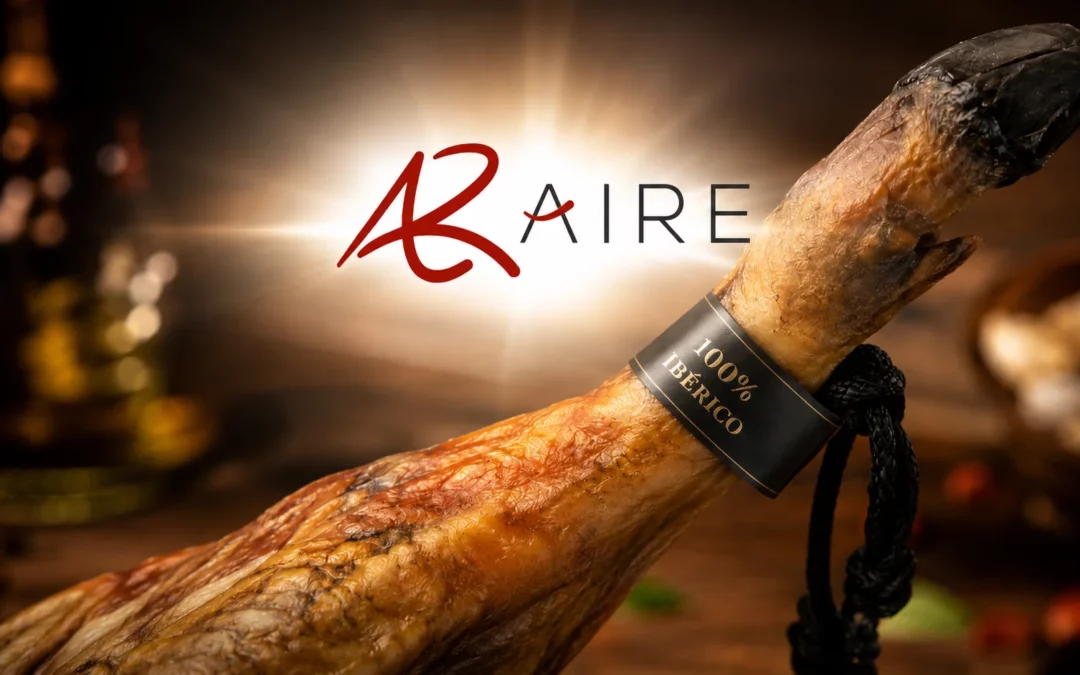
Jamón Ibérico vs Jamón Serrano: What the Difference Means for Professional Buyers
Both are Spanish cured hams. Both are dry-cured, sliced thin, and sold at a premium compared to non-Spanish alternatives. But for a distributor building a charcuterie catalog, or an importer deciding which category to invest in, Jamón Ibérico and Jamón Serrano are fundamentally different products — in breed, production economics, margin structure, and the type of client they serve.
This guide covers the differences that matter commercially: what drives the price gap, how each product behaves in a retail or HORECA setting, and how to decide which category (or combination) fits your business.
The Core Difference: Breed and Genetics
Jamón Serrano is produced from white pig breeds — Duroc, Landrace, Large White, Pietrain, and their crosses. These are the same commercial breeds used in conventional pork production worldwide. They grow fast, convert feed efficiently, and produce a standardized carcass. Serrano is not a breed designation — it means "mountain ham" (sierra = mountain range), referring to the traditional curing environment.
Jamón Ibérico is produced exclusively from Ibérico pigs — a heritage breed native to the Iberian Peninsula with a minimum of 50% Ibérico genetics (regulated under Royal Decree 4/2014). The Ibérico breed has a genetic predisposition to store fat within the muscle fibers, producing the intense marbling that is physically impossible to achieve with white pig breeds.
This genetic difference is the root cause of every other difference — flavor, texture, curing behavior, price, and commercial positioning.
Production, Curing, and Time to Market
The production timelines of these two products reflect entirely different economic models.
| Factor | Jamón Serrano | Jamón Ibérico |
|---|---|---|
| Pig breed | White breeds (Duroc, Landrace, Large White) | Ibérico breed (min. 50% genetic purity) |
| Diet | Grain-fed (intensive) | Varies by grade: acorns + pasture (Bellota), grain + pasture (Cebo de Campo), or grain (Cebo) |
| Animal lifespan | Shorter production cycle | Significantly longer, especially for Bellota |
| Curing time | 12–18 months | 24–48 months (longer for Bellota grades) |
| Intramuscular fat | Low. Fat is mostly subcutaneous (external). | High. Fat infiltrates the muscle (visible marbling). |
| Fat composition | Higher in saturated fatty acids | High in oleic acid (monounsaturated), especially in Bellota |
| Regulatory framework | TSG (Traditional Speciality Guaranteed) — less restrictive | RD 4/2014 + ÍTACA traceability — strictly regulated |
| Traceability | Standard EU traceability | Individual carcass tracking via ÍTACA + color-coded seal |
The curing time alone has a major commercial implication. A Serrano ham ties up capital for 12–18 months. A Bellota Ibérico ham ties it up for 36–48 months. This affects cash flow, warehouse requirements, and the financial profile of a distributor's inventory.
Flavor, Texture, and Why It Matters for Your Client
The sensory differences between Serrano and Ibérico are not subtle — they are immediately obvious to anyone tasting them side by side.
Jamón Serrano has a firm texture with clearly separated layers of lean meat and external fat. The flavor is salty, savory, and straightforward. The fat is white, firm at room temperature, and does not infiltrate the muscle. It is a good, accessible product with broad appeal.
Jamón Ibérico has a softer, more yielding texture. The marbling creates a visual and textural complexity that Serrano cannot replicate. The fat — particularly in Bellota grades — is oleic-acid-rich, with a lower melting point that produces the characteristic sensation of the ham dissolving on the palate. The flavor is deeper, more complex, with nutty and herbal notes that come from the Dehesa diet. The color is typically darker — a deeper ruby red compared to Serrano's pink.
For a retailer or HORECA operator, this translates directly into positioning. Serrano is an everyday product — sandwiches, tapas bars, charcuterie boards at accessible price points. Ibérico is an experience product — tasting menus, premium deli counters, luxury gifting, wine-pairing events. They serve different occasions, different customers, and different margin expectations.
The Commercial Equation: Price, Margin, and Catalog Strategy
The price gap between Serrano and Ibérico is not a percentage — it is a multiple. Depending on the grade and format, Ibérico can cost several times more per kilogram than Serrano. This gap reflects the cumulative effect of breed cost, longer animal lifespan, Dehesa land requirements (for Bellota), and 2–4x longer curing periods.
But price per kilo is not the only relevant metric. What matters commercially is margin per unit and margin per square meter of shelf space.
Serrano operates as a volume product. Margins are thinner, turnover is faster, and the product competes in a crowded field with Italian prosciutto, French jambon sec, and other European cured hams. Differentiation is limited. Price pressure is constant.
Ibérico operates as a premium product with structural price protection. The supply is limited (the Dehesa is finite, the Ibérico census is small), and the regulatory framework (RD 4/2014, ÍTACA) prevents uncontrolled quality dilution. This means margins are higher, price erosion is slower, and the product occupies a category with fewer direct competitors. For a distributor, Ibérico is a higher margin-per-SKU item even if the volume per SKU is lower.
Many distributors carry both. Serrano provides the volume base — the product that fills orders and keeps logistics efficient. Ibérico provides the margin driver — the product that elevates the catalog, attracts premium clients, and improves overall profitability. The two categories are complementary, not competing.
Note on "Pata Negra": Under current Spanish regulation, the term "Pata Negra" is reserved exclusively for 100% Ibérico de Bellota (black label). It cannot be used for Serrano or for lower Ibérico grades. Using it loosely in marketing materials can create compliance issues in certain markets.
Beyond Cured Ham: The Fresh-Cut Opportunity
The comparison above focuses on cured ham, which is the most internationally recognized format for both Serrano and Ibérico. But there is a category where Ibérico has no Serrano equivalent at all: fresh Ibérico pork cuts.
Cuts like the Presa, Secreto, Pluma, and Abanico are extracted from the Ibérico carcass through a specific Spanish despiece that does not exist in white-pig butchery. These cuts have no Serrano counterpart, no conventional pork equivalent, and no direct competitor from any other country. For a distributor looking for a defensible premium category with genuine uniqueness, fresh Ibérico cuts are a more distinctive opportunity than cured ham — where Ibérico at least shares shelf space with Serrano and prosciutto.
For a detailed breakdown of each cut's specifications, see our Ibérico Pork Cuts Guide.
Frequently Asked Questions
What is the main difference between Jamón Ibérico and Jamón Serrano?
The breed of pig. Jamón Ibérico comes from Ibérico pigs (min. 50% breed purity), which deposit fat within the muscle. Jamón Serrano comes from white commercial breeds (Duroc, Landrace, Large White), which carry fat externally. This genetic difference drives all other differences in flavor, texture, curing time, and price.
Why is Jamón Ibérico so much more expensive than Serrano?
Cumulative cost factors: a slower-growing heritage breed, longer animal lifespan, Dehesa land requirements for Bellota grades, 24–48 months of curing (vs 12–18 for Serrano), strict individual traceability under RD 4/2014, and a structurally limited supply. For a full breakdown, see our guide on why Ibérico pork is expensive.
Can a distributor carry both Serrano and Ibérico?
Yes, and many do. They serve different market segments. Serrano provides volume and broad accessibility. Ibérico provides higher margins and premium positioning. The two categories are complementary in a charcuterie portfolio.
Is "Pata Negra" the same as Ibérico?
Not exactly. Under current Spanish law, "Pata Negra" is reserved for the highest grade only: 100% Ibérico de Bellota (black label). It should not be used for other Ibérico grades or for Serrano. Misuse can cause compliance issues in regulated markets.
What are the Ibérico grades within Jamón Ibérico?
Four grades, identified by colored seals: Black (100% Ibérico de Bellota), Red (Bellota Ibérico, 50–75% breed), Green (Cebo de Campo — free-range, grain-fed), and White (Cebo — grain-fed, intensive). For a detailed comparison, see our Bellota vs Cebo guide.
Does Jamón Serrano have a grading system like Ibérico?
Serrano is protected as a TSG (Traditional Speciality Guaranteed) under EU regulation, but it does not have the breed-and-diet color-coded grading system that Ibérico uses. Serrano quality varies by producer and curing time, but the regulatory framework is less granular than the Ibérico Norma.
How do I start sourcing Ibérico for my business?
Contact the AIRE Ibérico Meat team with details about your market, the grades and formats you're interested in, and your estimated volumes.
Ibérico Pork and Cured Ham, Direct from Salamanca
Fresh cuts and cured products across all Ibérico grades. Talk to us about specs, availability, and export logistics.