

For international procurement managers and HORECA logistics directors, Spanish cured meats are no longer just a traditional purchase. In 2026, we are looking at a highly profitable, strategic category. Its financial performance doesn't just rely on organic demand (which continues to surge across Asia and North America), but on something far more pragmatic: intrinsic logistical stability.
Unlike fresh meat, which demands a flawless cold chain and aggressive stock rotation, cured charcuterie offers a prolonged shelf-life and highly predictable waste management. This technical guide breaks down the keys to scaling a cured meat portfolio, operating directly from the Salamanca logistics hub.
The Physics of Curing: Charcuterie as a Financial Anchor
While fresh Iberico pork cuts drive seasonal menus and revenue spikes, cured meats are the solid cash-flow anchor for any successful import operation. Ultimately, it all comes down to the physics of the curing process.
The process combines controlled fermentation followed by slow cellar drying. The technical result is a drastic reduction in Water Activity (a_w), generally dropping below 0.90. For a distributor, this laboratory metric translates into direct, measurable commercial implications:
- Robust Shelf-Life: We are talking about an optimal commercial window of 10 to 14 months, which massively flexibilizes sales forecasting.
- Risk Mitigation: The threat of stockouts or shrinkage due to expiration during long ocean freights or unforeseen customs delays is almost entirely eliminated.
- Efficient Storage: Reduced reliance on sub-zero temperatures, significantly lowering warehousing costs in the destination country.
In the current landscape, key markets (the US, UK, and Southeast Asia) have sophisticated their demands. The end-buyer is no longer looking for "generic chorizo." The real opportunity for a purchasing manager lies in strategic Tiering. The winning formula involves securing volume and shelf rotation with Cebo products, while pulling the net margin upward through exclusive, limited-production pieces like the 100% Iberico Bellota Lomo.
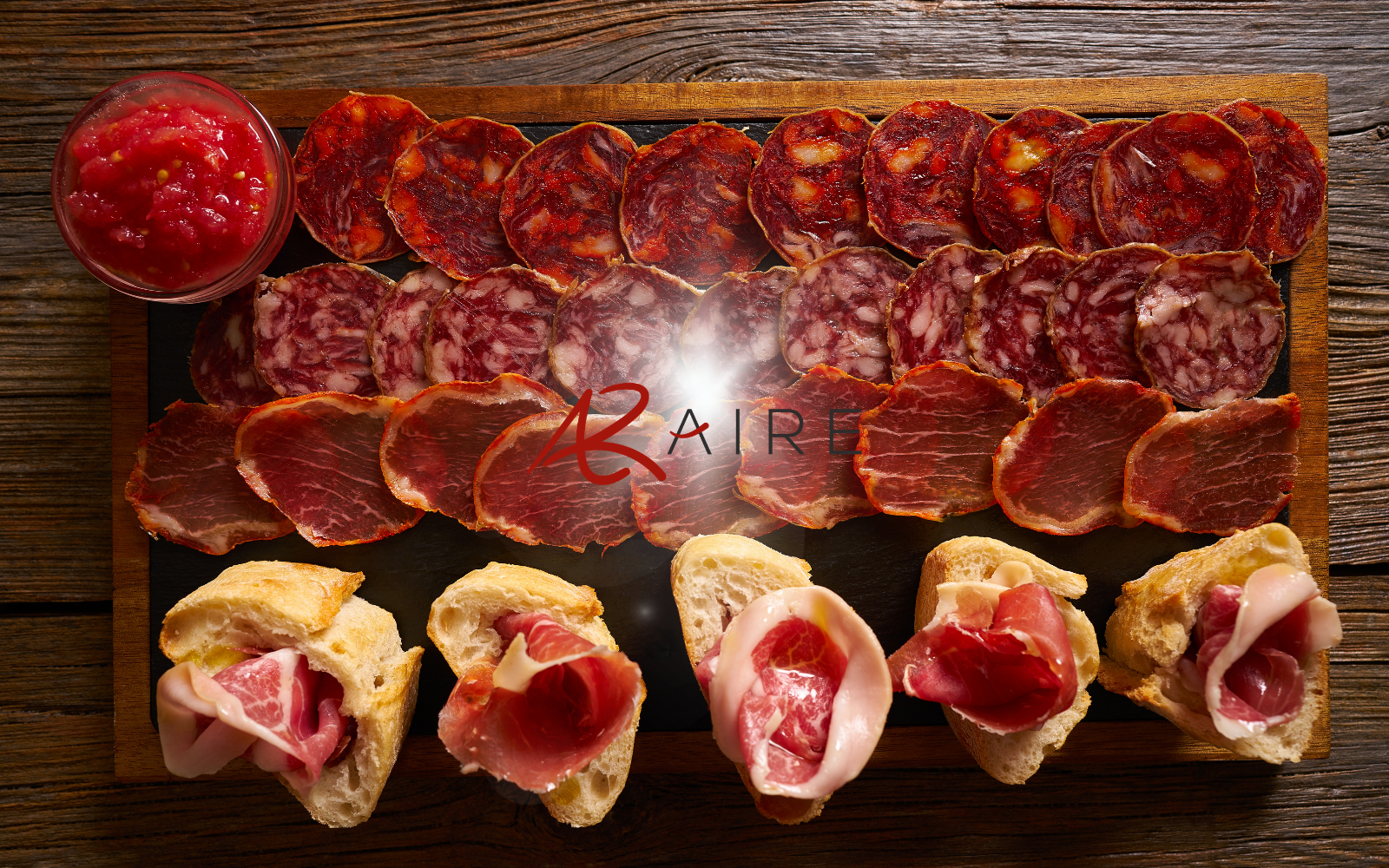
Technical Specs: The Salamanca Competitive Advantage
The Salamanca-Guijuelo axis isn't just a geographical indication stamped on a map; it is a competitive edge built on pure climate engineering. Being situated at an altitude above 800 meters (2,600+ feet) exposes the curing cellars to constant dry, cold winds for most of the year.
This climate allows for a natural curing process that drastically reduces the reliance on aggressive chemical nitrites and preservatives. Today, this factor is no longer a mere artisanal detail—it has become the primary selling point if you want to fit into the "Clean Label" movement currently dominating premium European and American retail.
| Cut / Product | Morphology | Commercial Profile | Primary Application |
|---|---|---|---|
| Lomo Embuchado | Whole muscle, minimal exterior fat | High yield, zero waste | Premium retail and fine delis |
| Lomito (Presa) | Extreme lipid infiltration | Maximum margin per serving | High-end dining (Carpaccios) |
| Salchichón | Fine/coarse mince, black pepper | Umami profile, high cultural tolerance | Expansion in Asian markets |
| Chorizo | Coarse mince, Pimentón de la Vera | Anchor flavor, extremely high rotation | Traditional markets, general hospitality |
The Lomito Case Study: Extracted directly from the Presa Iberica, this piece is the best-kept secret for maximizing HORECA profits. Its intense marbling allows restaurateurs to position signature dishes with a strictly controlled cost per plate and a perceived value far superior to any standard cured meat on the market.
Optimize Your Cured Meats Portfolio
Let's discuss volumes, pallet consolidation, and direct-from-factory export logistics for your specific market.
Sensory Adaptation: Mapping Flavors by Region
Designing a cross-border selection blindly is a risk no importer should take. It is vital to cross-reference the product's flavor profiles with the destination country's cultural tolerance to avoid tying up inventory.
Chorizo, with its unmistakable Pimentón de la Vera profile, acts as the grand ambassador of Spanish charcuterie. It moves massive volume in mature markets, but the intensity of the spice and its aftertaste can be too invasive for uninitiated consumers in certain parts of Asia or for purist client profiles.
That is where Salchichón comes in—often severely underestimated. Being cured primarily with sea salt, black pepper, and a touch of nutmeg, it highly respects the intrinsic flavor of the meat. This product shows exceptional sales performance in Central Europe and in the most demanding Asian markets. Consumers in these regions are looking above all for the natural umami of the cured Iberico fat, often penalizing heavy spices.
FAQs for Importers
What is the real logistical impact of Water Activity (a_w)?
An a_w below 0.90 physically blocks the proliferation of the vast majority of pathogenic bacteria. From a business perspective, this means the cargo can withstand moderate temperature variations during long ocean freights without skyrocketing the risk of contamination or quality loss. It is, quite literally, a life insurance policy for your transit inventory.
How does Salamanca's altitude affect labeling regulations?
By accelerating the natural drying process. Requiring less time in artificial drying rooms and benefiting from constant dehydration via cold winds, formulations can avoid loading the product with artificial preservatives. This makes it infinitely easier to enter supermarket chains that impose strict "Clean Label" policies on their international suppliers.
Is it more profitable to import whole pieces or pre-sliced product?
It depends entirely on your sales channel. The sliced format offers immediate convenience and strict portion control for high-volume retail and catering, but it drives up maritime or air freight costs due to the empty space (air) in the packaging. Whole pieces (vacuum-packed halves or quarters) maximize the kilos-per-pallet ratio and are the preferred option for specialized delis and hospitality businesses equipped with professional slicers.